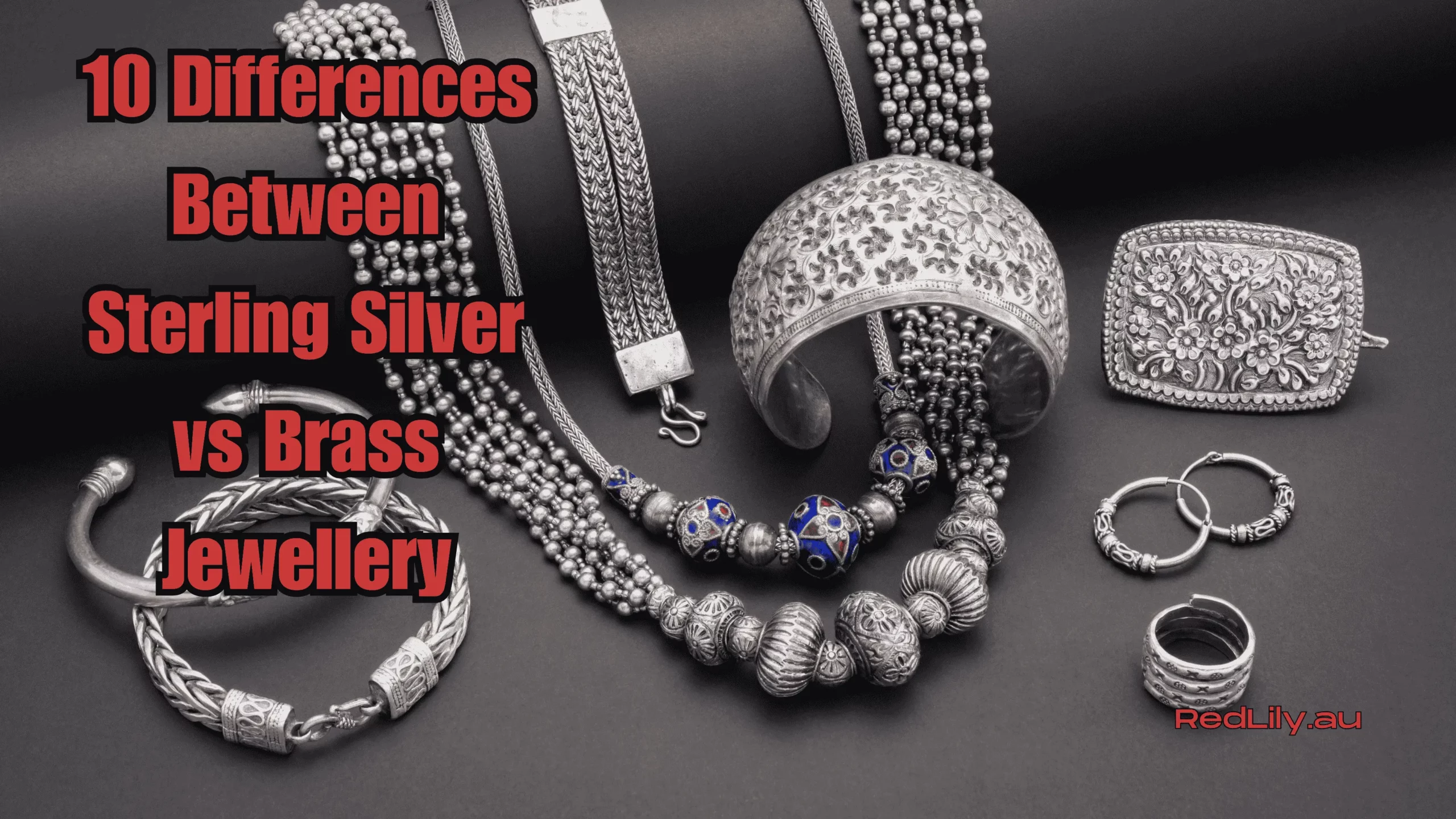
Depending on your needs, preferences, and budget, you can wear jewellery made from various metals. Two of the materials for the most beautiful pieces are sterling silver and brass. But what are the real differences between sterling silver vs brass jewellery, which matter to a wearer?
Sterling silver is a premium and durable alloy that offers the most elegant look and has hypoallergenic properties. Brass is a blend of copper and zinc, so it has a warm, golden hue, and is also more affordable. However, you may not want to choose the latter because it tarnishes quickly and requires more maintenance.
This article is the most complete information piece on the differences between sterling silver vs brass jewellery you can find. Read it further to understand everything about both these metals and pieces crafted with them. After you do, it will be easier to make an informed decision when shopping for everyday or special occasion adornments.
10 Differences Between Sterling Silver vs Brass Jewellery
Whether you prioritize practicality or aesthetics, I will clarify your choices through the present comparison. As promised, I will cover the differences between sterling silver vs brass jewellery to determine which metal suits you best. Here are these differences, explained:
1. Appearance
The most noticeable distinction between sterling silver and brass jewellery is appearance. The first shines brightly and reflects a cool-toned silver finish, so it’s a timeless choice for elegant Red Lily attires. Its natural brilliance complements both classic and modern designs for all sorts of outfits and fashion accessories.
On the other hand, brass jewellery features a warm, golden-yellow hue. It resembles gold, so many people prefer it as an alternative to this expensive metal. What’s also interesting about brass is that it offers a vintage, antique look.
Choosing between the two metals depending on appearance is only a matter of personal preference and style. The dress code dictates what to choose sometimes too, so pay attention to this aspect as well. For instance, a sterling silver statement necklace will always complement a little black dress for a soirée.
2. Cultural And Historical Significance
Both sterling silver and brass jewellery have rich cultural and historical significance that shapes their value and use in society. Appreciated for centuries as a precious metal, sterling silver is associated with spirituality, wealth, and royalty. During ancient times, it was used as currency, for crafting religious artefacts and jewellery, or as a status symbol.
Since it’s made from zinc and copper, brass has been widely used to make weapons, musical instruments and decorative arts. In African, Indian, and Southeast Asian cultures, people have used it for statues, ceremonial objects, and intricate jewellery pieces. Nowadays, brass is popular in vintage and bohemian jewellery.
If you want to wear statement jewellery with a rustic or antique appeal, opt for brass. But if you must impress with classy attire, put on one or a few pieces made with sterling silver. The most important thing is that you say something about how you interpret the past and different cultures with your jewellery.
3. Workability
This difference determines how easily a metal can be shaped, moulded, or engraved into the most interesting designs. Sterling silver is soft and malleable, so ideal for delicate craftsmanship and fine detailing. Jewellers can hammer or solder it with relative ease to create filigree patterns and detailed embellishments.
In contrast, brass is harder and more rigid, so also durable. However, it can be quite difficult to manipulate. While jewellers can still shape it into intricate designs, they need some of the most advanced tools to do so.
If sterling silver jewellery is on your mind, know that this metal’s softness makes it prone to dents and scratches. Brass is perfect for geometric designs and bold statement pieces because it holds its form well. Workability dictates that sterling silver jewellery is more suitable for a refined look and brass, for chunky, sturdier pieces.
4. Reaction To Water
Sterling silver and brass jewellery react differently to water, telling a lot about their maintenance and longevity. Even if it’s resistant to this natural liquid, sterling silver tarnishes more quickly if exposed to moisture and salt water. Luckily, you can easily remove the blackish spots it develop with silver cleaning solutions or regular polishing.
On the other hand, brass is more prone to discolouration and oxidation when exposed to water. Since it contains copper, it can form a greenish patina that may transfer onto the skin. To maintain brass jewellery, keep it out of water and clean it regularly with lemon juice and baking soda.
If you want your Red Lily jewellery to look flawless all the time, it’s important to store it properly. It doesn’t matter if you own more sterling silver or more brass pieces, appropriate storing is always safe. Make sure humidity is not present and take them off when showering, exercising, or going swimming.
5. Price
This other difference between sterling silver and brass jewellery is also significant. As a precious metal that pieces from the ethical Red Lily shop are made of too, sterling silver is more expensive. Therefore, it is the ideal choice for luxury pieces and heirloom accessories.
Brass is not a precious metal, so you won’t break the bank when buying it. It is a preferred choice for bold statement designs, fashion jewellery, and costume pieces. Being affordable, you can change brass jewellery monthly or even weekly.
The price of sterling silver usually fluctuates based on pieces and market demand, but this metal holds its value well. Brass jewellery doesn’t have the same resale or investment value as sterling silver pieces. It would be wise to wear brass jewellery as trendy accessories and to keep sterling silver pieces for special occasions.
6. Environmental Impact
The ways composition metals are sourced and processed dictate the environmental impact of sterling silver and brass jewellery. Sterling silver requires extensive mining and its extraction often involves harmful chemicals like mercury and cyanide. In other words, obtaining this metal for jewellery might pose serious risks to ecosystems and local communities.
Brass is a more sustainable option when it comes to the environmental impact. Unlike silver, it is widely recycled and much of it used for jewellery crafting comes from reclaimed materials. In addition, the carbon footprint of brass production is lower when compared to silver mining.
The good news is that nowadays, most jewellers are using recycled sterling silver too, so there’s reduced environmental damage. When it comes to brass, some of its alloys may contain nickel or lead, both of which are dangerous for the environment. What you should note here is that choosing ethically sourced or recycled metals for your jewellery is an eco-friendly path.
7. Popularity In Fashion Trends
A difference that reflects the roles of sterling silver and brass in the jewellery world is popularity in fashion trends. Fashion experts and most people regard sterling silver jewellery as a classic choice. This metal is a staple in minimalist and high-end trends because it has a refined appearance.
Brass jewellery became more popular only in recent years, especially since the vintage, eclectic, and bohemian fashion scenes evolved. The warm golden hue of this metal is appealing to trendsetters and those interested in fashion-forward designs. The brass option is suitable for artsy jewellery trends.
If you are adept at sophisticated trends that don’t change every year or season, opt for sterling silver jewellery. Brass pieces are rather for those restless souls who prefer change and can’t stand still for too long. Both metals make beautiful jewellery, but their popularity in trends says what matters about style.
8. Suitability For Gemstones
A notable difference between sterling silver and brass jewellery is the metals’ suitability for gemstones. Sterling silver has a bright, reflective surface, so it complements semi-precious and precious stones alike. Its cool-toned sheen makes emeralds, diamonds, and sapphires appear more striking and vivid.
The golden hue of brass provides a contrasting backdrop for gemstones with earthy or rich tones. This metal looks incredible next to amber, lapis lazuli, or turquoise. But don’t expect brass to showcase sparkling gemstones as effectively as sterling silver.
Sterling silver is perfect for engagement rings and luxury pieces with gemstones as focal points. Brass has a vintage appeal, so it works for designs that put in front of the stone’s organic or rustic beauty. You can browse the Red Lily shop for such designs, as their sterling silver and brass collections are quite impressive.
9. Colour Fading
When choosing between sterling silver and brass jewellery, you should also consider the colour fading difference. The first remains bright and has a shiny appearance for a long time, even if tarnishes. When it does, its colour doesn’t fade entirely, but its natural sheen becomes dull.
As it ages, brass is more prone to colour changes. If exposed to air, sweat, or moisture, its warm golden-yellow hue darkens or the metal can develop a greenish patina. This process is a natural part of brass ageing, is called oxidation.
If you want to prevent the noticeable fading of sterling silver and maintain its original luster, clean it regularly. Brass jewellery may need more maintenance to maintain its golden colour. Both metals can lose their original colour as a result of wear and environmental exposure.
10. Melting Point
The jewellery-making process and thus, the melting point of metals, is another difference between sterling silver and brass pieces. For silver, the melting point is relatively low, at about 1,763°F (962°C). To put it more simply, sterling silver allows for faster casting, soldering, and shaping.
In comparison, the melting point of brass is at around 1,650°F (899°C). It can be quite difficult to work with this metal, as it requires higher temperatures for casting and soldering. However, once crafted, brass has a stronger and more durable finish.
The lower melting point of sterling silver means that this metal is more vulnerable to heat damage. As far as the higher melting point of brass goes, this contributes to the rigidity and resilience of jewellery. Sterling silver would never be suitable for the bold, structural brass designs that require extra strength.
Pros And Cons Of Choosing Between Sterling Silver And Brass Jewellery
Now that you know all about the differences between sterling silver and brass jewellery, it’s time for more information. For instance, did you know that there are some pros and also some cons to choosing jewellery made from these metals? If you didn’t, have a look over this table:
| Pros | Cons |
| Unique Aesthetics | Not Suitable for Same Designs |
| Affordable Options | Low Resistance to Water |
| Rich Cultural and Historical Significances | Pretentious with Gemstone Choices |
Conclusion
The differences betwen sterling silver vs brass jewellery have been revealed, so choose your accessories wisely. While sterling silver offers timeless elegance, brass is more affordable and trendier. In the end, such differences should indicate what to put on.
0 Comments